

Understanding art
Let go of your “lifeworld”

I recently listened to this episode of Andy J. Pizza’s podcast on overcoming creative fear and this resonated with me a lot:
“…It might start with how you approach and see and engage with the creative work as a whole, art as a whole. It might start in the way that you consume and view the work of other people. It’s kind of like, you know, the people that are the most socially worried about judgment are often the most judgmental people…”- Andy J. Pizza
I am really interested in questions like how we make sense of art and how do we form our opinions around it. There are contemporary forms of art like performance art, a modern form of theatre, that we might not understand because it’s very new, unusual, frequently subversive and something we struggle to categorize into a particular genre.
“Complexity or ironies”
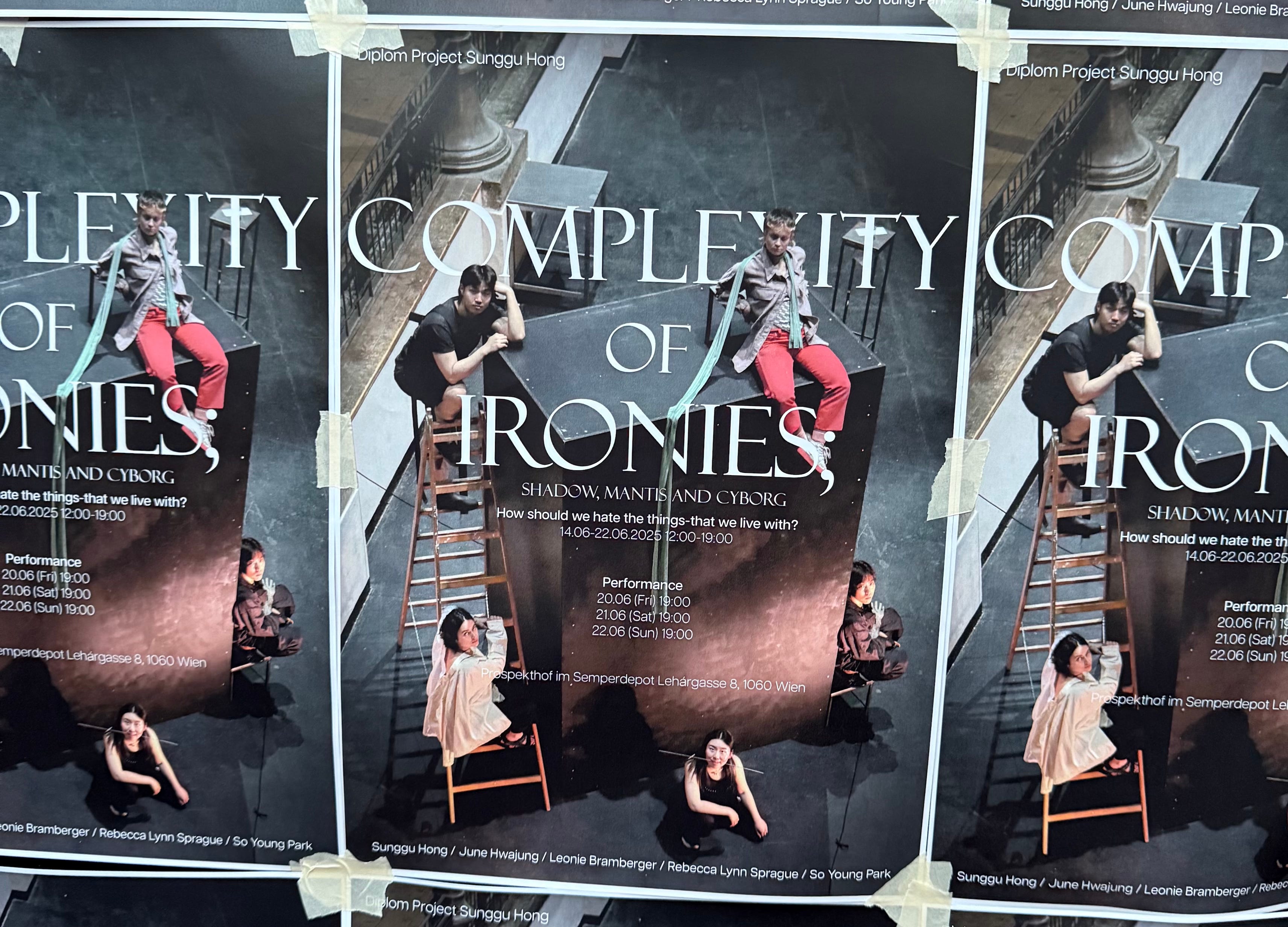
Last summer I was walking near one of the buildings of the academy of arts during the time when students graduate and present their work in spaces open to the general public. Me & my friends accidentally saw a poster advertising a performance piece that, as we learned from the student and director, Sunggu Hong, was his master’s thesis. We got interested and next day went to take a look at the performance.
To say that it was a very odd experience is to say nothing. The piece included things such as one actress walking on all fours and interacting with the audience, another taking a bath in muddy water, strange sounds coming from different directions, parts of a mannequin laying on the floor - all this with little lighting and accompanied by unharmonious music sounds and monotonous speech.
Even though I was confronted by the gloominess of the scene, the blurring of the line between the actors and the audience, the strangeness and seeming incoherence of things happening on stage - I enjoyed it.
After the performance ended, it took me some time to understand what I had seen. The next morning I realized that this performance changed the way I experience mundane things. We were having breakfast on our balcony and I started paying attention to the fact that the noises and things happening on the street are, in fact, incoherent, haphazard and sometimes strange or unexpected. I sat on my balcony and listend to dogs barking, someone swearing, loud construction works happening somewhere out of sight, the sounds of traffic. I felt the heat of the sun contrasted with the coldness of the June air.
The experience made me more alert and attuned to things that are happening around, although parts of the performance were uncomfortable and incomprehensible. This realization also led to the next one regarding the artistic process - even though the performance seemed like a haphazard chain of events, it actually required a lot of planning and coordination of actions, people, sounds and objects. As the director himself said to us - he was running this performance for several days in a row and each time it felt like a different experience - the audience changes, but also the actors themselves perform slightly differently from one day to another.
Bracketing
What helped me to connect with this very unusual artwork is a method I learned about during a philosophy course at the university, which is called “bracketing” (or a fancier version - epoché). It was introduced by the German philosopher Edmund Husserl, whose work I find really interesting and in many ways relevant to art.
I simplified the idea behind bracketing for my own use and want to share my interpretation of it with you. The first step is to suspend our judgement, set aside any assumptions and focus purely on the aesthetic experience - i.e. just be present in front of the artwork. The next step implies that we gradually and intentionally let in our previous life experiences that shape our understanding of the artwork (Husserl calls these previous experiences the “lifeworld”). The main idea is to consciously notice how our lifeworld changes our experience and creates the horizon within which make sense of what we see. Husserl encourages us to be reflectively aware of how our lifeworld frames our experience, while developing understanding of how other people experience the same artwork in a completely different way.
This intentional approach helps me to focus on the richness of the aesthetic experience and not on a binary evaluation of the work (like - don’t like, understand - don’t undertstand, pretty - ugly, etc.).
I feel that actively engaging with art and challenging our own preconceptions is crucial when we try to understand what is it we’re looking at. This approach helps with all kinds of art, including representational and generally more traditional art. The main idea is to stop focusing on the exterior so much, and turn to the interior instead - the aesthetic experience itself.
Bracketing helped me personally to enjoy a broader variety of art without reducing my experience to a binary opinion “like - don’t like”. Moreover, it helped me to look at my own practice from a different perspective and enriched my process and the way I see my own work.
If you enjoyed this article, you may find these pieces interesting too:


Thank you for reading and being a part of this space. If you enjoyed this post, feel free to give it a like, leave a comment, or share it with someone who might appreciate it.
I always love hearing from you in the comments - have you had similar experiences with art? How did you approach it?
If you haven’t yet, consider subscribing to stay connected. Everyone is welcome here!
Until next time!
Lisa
So many good things to ponder
This is very interesting, thanks!